Guide
RV Solar Panels: A Beginner's Guide to Going Solar
How RV solar works, which panels to choose, and when to install it yourself versus having a pro do it.
- Since 1995
- Insurance handled
- Written estimate first
How RV solar works
RV solar panels are photovoltaic panels that turn sunlight into electricity for your house systems — lights, fans, the fridge, electronics — so you rely less on campground hookups and generator fuel.
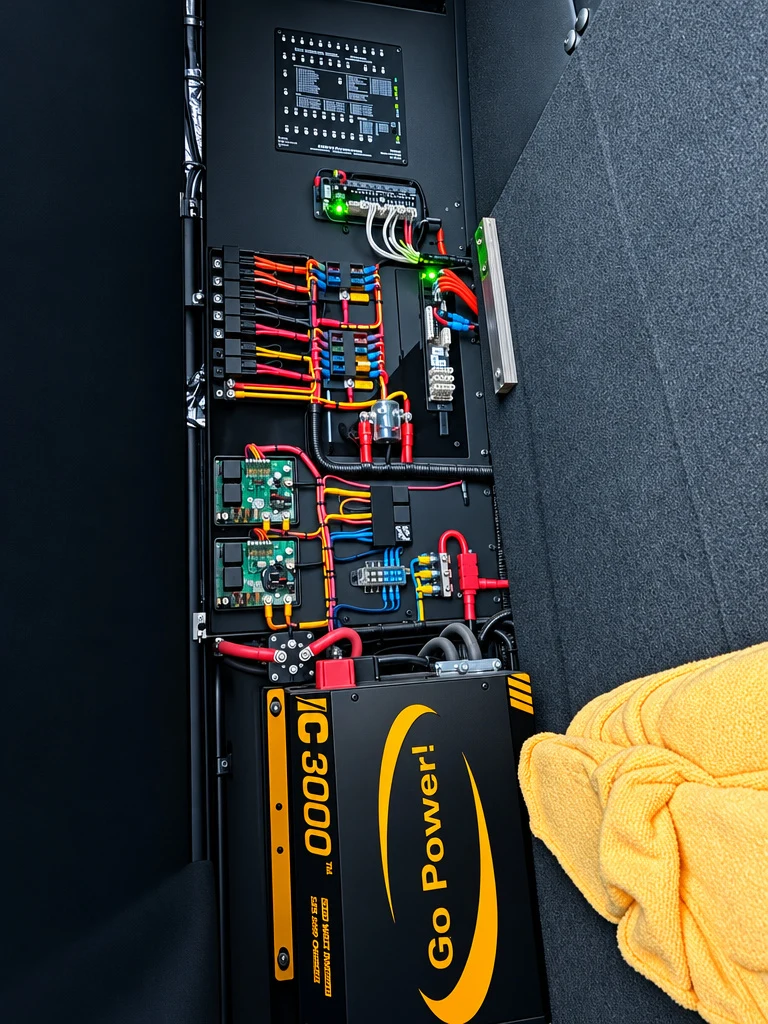
A typical RV solar system has four parts:
- Solar panels make direct current (DC) power from sunlight.
- A charge controller regulates that power so the batteries charge efficiently without overcharging. MPPT controllers get the most out of each panel.
- Batteries store the power. Lithium (LiFePO4) batteries store and deliver far more usable energy than lead-acid.
- An inverter converts stored DC power into 120-volt AC for standard household appliances.
Types of RV solar panels
| Panel type | Strengths | Trade-offs |
|---|---|---|
| Monocrystalline | Most power per square foot — ideal when roof space is limited | Costs more |
| Polycrystalline | More affordable | Slightly less efficient; recognizable blue color |
| Flexible | Lightweight; fits curved roofs | Less efficient than rigid panels |
| Portable | Place it in the sun wherever you park; great as a supplement | Must be set up and stored |
Why RV owners go solar
- Energy independence — longer stays off the grid.
- Lower running costs — less generator fuel and fewer paid hookups.
- Quiet — panels make no noise, unlike generators.
- Low maintenance — mostly cleaning and an occasional inspection.
- Resale appeal — many buyers look for solar.
How much solar do you need?
A useful starting point: about 200–400 watts for weekend rigs running lights, fans and the fridge, and 600 watts or more for boondockers running residential appliances. The right size depends on your batteries, appliances and how you camp.
DIY or professional installation?
A DIY install can save labor if you have basic electrical knowledge, the right tools and patience: plan the layout around vents and A/C units, mount and seal the panels against wind and leaks, wire the panels, mount the controller in a cool, dry spot, connect the batteries with the correct polarity, and test the system.
Every roof penetration is a potential leak, and every connection is a potential fault. A professional install gets you a system sized to your actual usage, sealed properly, and supported if something needs troubleshooting.
Thinking about solar or lithium? See RV lithium, solar and inverter upgrades — free consultation and a written quote.

Ready when you are.
Call or send a request — we confirm a time the same business day.
Request an appointment
Appointments available Monday–Friday, 8:00 am – 5:00 pm. Saturday appointments begin January 1, 2027.
Visit or call
412 W Levers Pl, Orange, CA 92867
- Monday – Friday8:00 am – 5:00 pm
- SaturdayOpening January 1, 2027
- SundayClosed