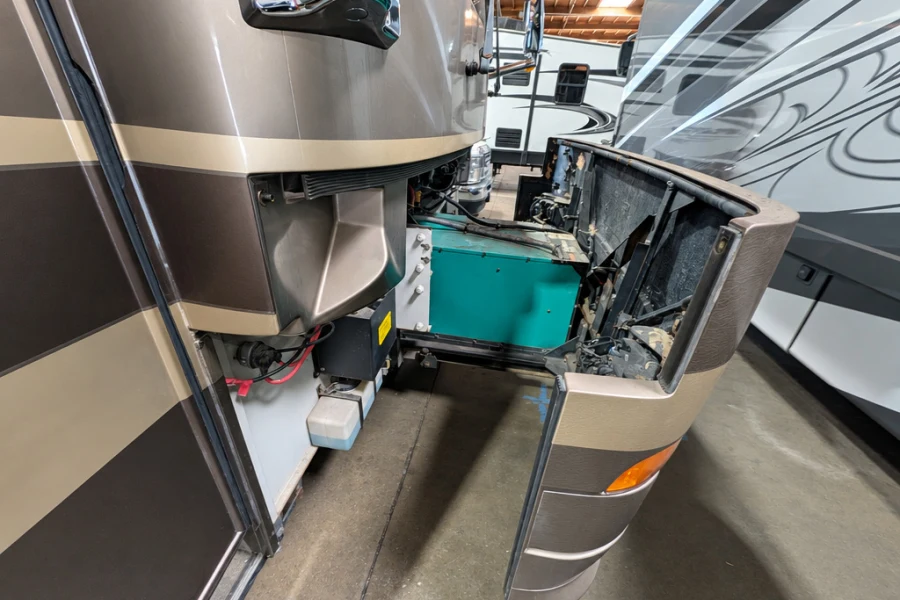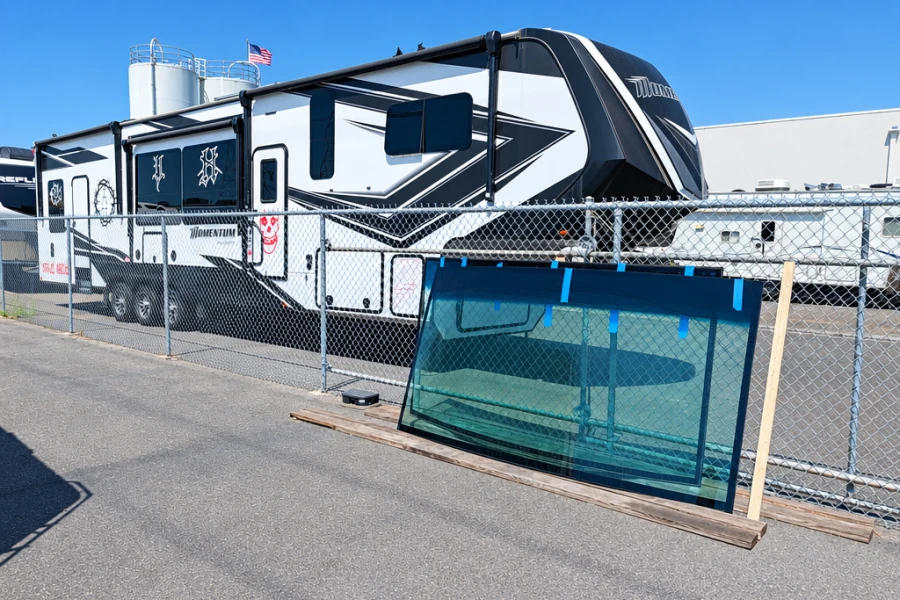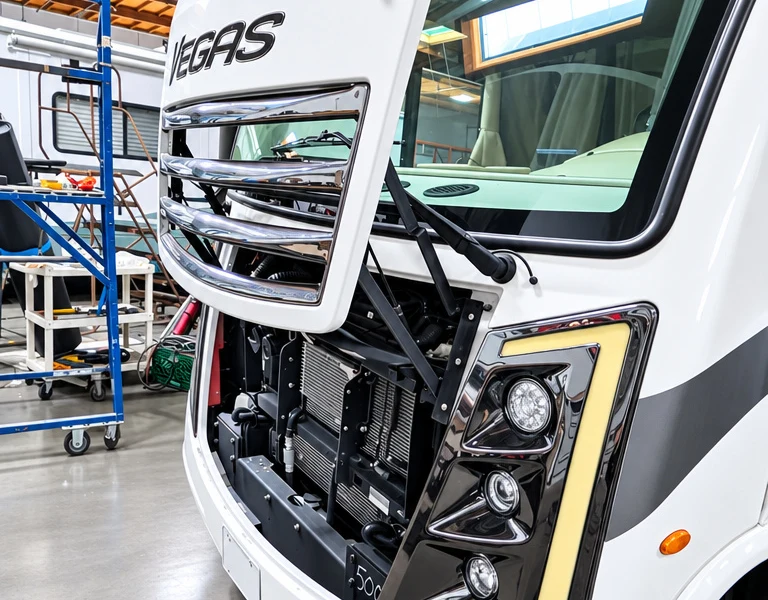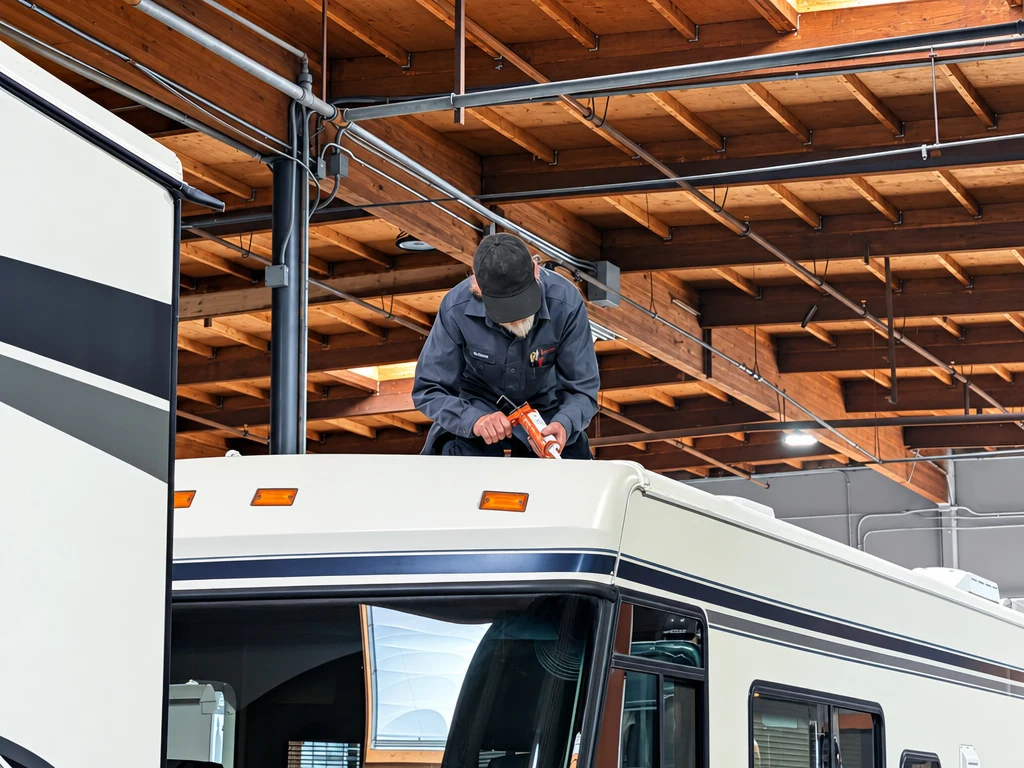
After an accident, the dent you can see is often the smallest part of the problem. An RV’s walls are layered fiberglass, wood or composite panels and framing, held together by seals. An impact can break those seals far from the point of contact — and water does the rest.
Why RV collision damage hides
Unlike a car’s steel body, an RV’s sidewalls and roof flex on impact. Seams separate, sealant cracks and fasteners loosen, sometimes several feet from the visible damage. Nothing looks wrong — until it rains.
Signs of hidden damage
- Gaps at roof edges, end caps or trim near the impact
- Doors, windows or slides that no longer close or seal the same way
- Waves or bubbles in fiberglass sidewalls
- New squeaks or rattles while driving
- Moisture, stains or musty smells weeks after the accident
What happens if it's missed
- Water gets past broken seals.
- Wood framing and decking absorb it.
- Fiberglass delaminates from the wall underneath.
- Rot spreads, and the repair becomes structural.
Get a full inspection
After any collision, have the RV inspected beyond the visible damage, and keep it covered until it’s repaired. Hidden damage found during repair is typically handled as a supplement to your insurance claim. See RV collision repair and RV insurance claims.
Frequently asked questions
Can a small dent cause a leak?
Yes. The impact can open seams or seals away from the dent.
Does insurance cover hidden damage found later?
Hidden damage found during repair is usually handled with a supplemental claim. Report it promptly.
Should I drive the RV after a collision?
If it’s safe to drive, cover any openings to keep water out until it’s repaired.
Need help with this? See our RV collision repair service, call (949) 830-1996, or request an appointment. Appointments are available Monday through Friday, and Saturday appointments begin January 1, 2027.

Have a question about your RV?
Our service advisors answer the phone — and we put the estimate in writing before any work.