Cold weather reduces how much power a battery can deliver, and furnaces and fans add load at the same time. Healthy batteries and the right setup keep the lights — and the heat — on.
Lead-acid batteries in the cold
- Capacity drops as temperatures fall
- A discharged battery can freeze; a charged one is far more resistant
- Keep them fully charged and check water levels in flooded batteries
Lithium batteries in the cold
Lithium (LiFePO4) batteries hold their voltage well, but many shouldn’t be charged below freezing. Some include built-in heaters or low-temperature charge protection. Know your battery’s limits.
Before a winter trip
- Load-test the batteries.
- Clean and tighten terminals.
- Check that the converter or charger is working.
- Top off with a full charge.
- Plan for the furnace fan’s power draw.
Upgrade options
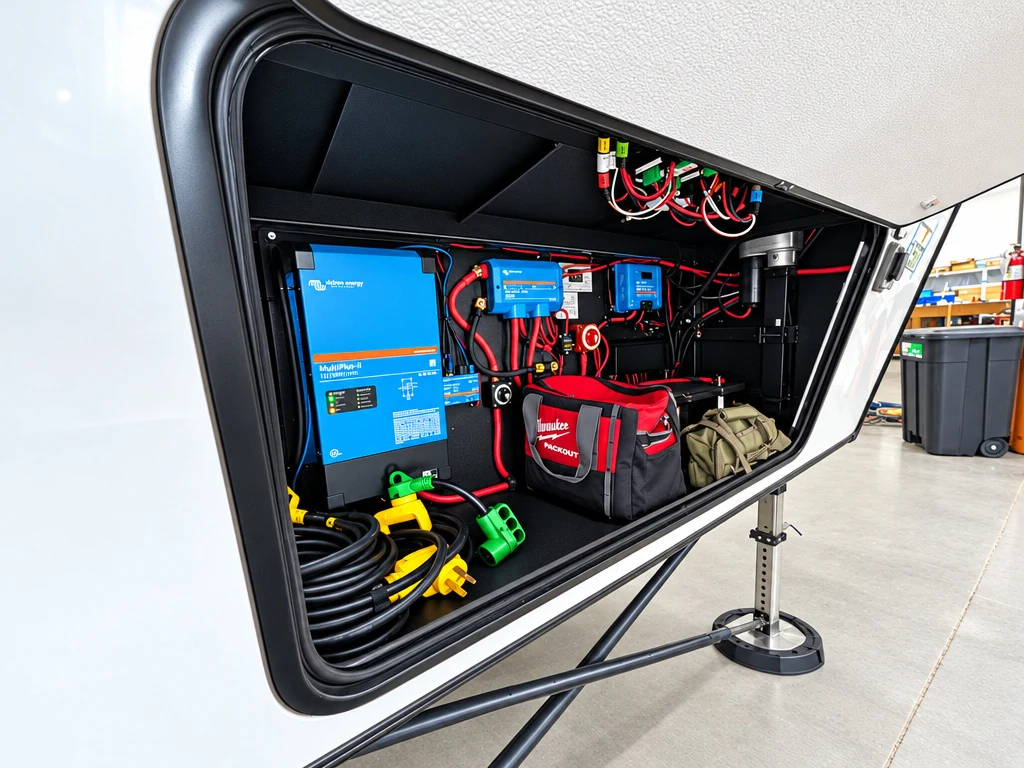
If your batteries struggle, a lithium bank with solar can give you much more usable power. See lithium, solar and inverter upgrades.
Frequently asked questions
Why do my RV batteries die faster in winter?
Cold reduces capacity, and the furnace fan adds load.
Can lithium batteries be used in winter?
Yes, with attention to charging limits below freezing; heated models help.
Can you test my batteries?
Yes — load testing and charging-system checks.
Need help with this? See our lithium, solar and inverter upgrades service, call (949) 830-1996, or request an appointment. Appointments are available Monday through Friday, and Saturday appointments begin January 1, 2027.

Have a question about your RV?
Our service advisors answer the phone — and we put the estimate in writing before any work.