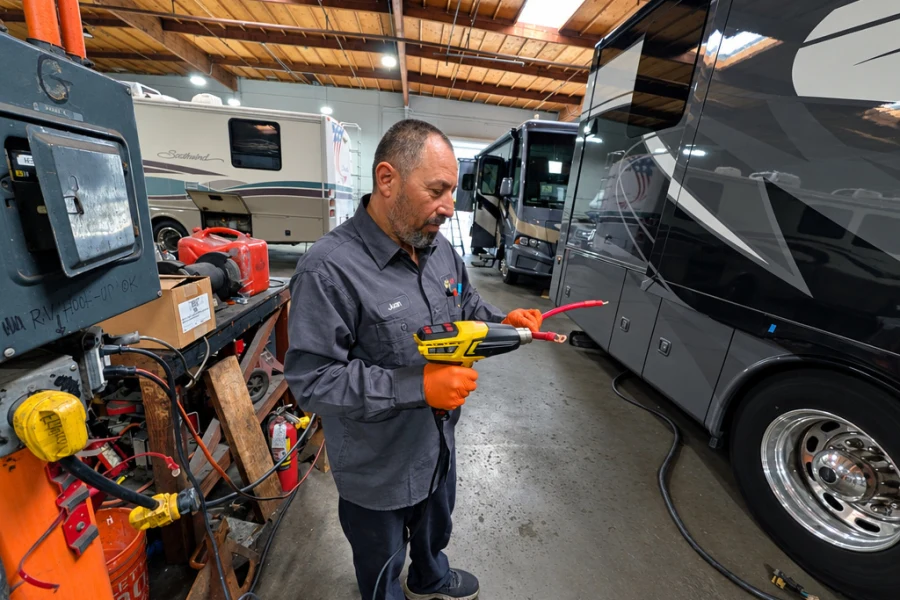
Modern RVs run on electricity more than ever — slides, leveling jacks, residential fridges, inverters, control panels and solar. When the electrical system has a problem, everything else does too. Here’s how to keep it healthy.
Know your two systems
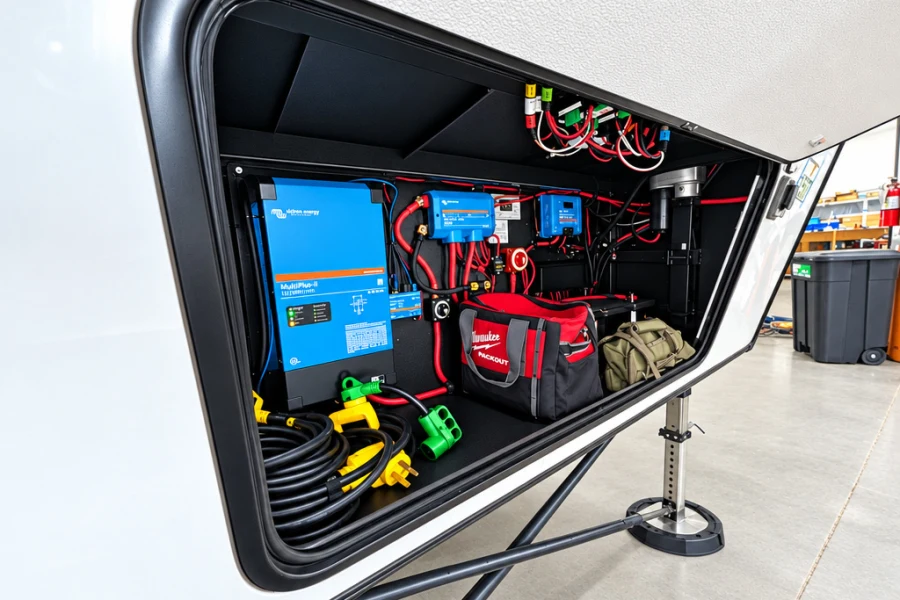
Most RVs have a 12-volt DC system (lights, pumps, fans, controls, slides) powered by house batteries, and a 120-volt AC system (outlets, microwave, A/C) powered by shore power, a generator or an inverter. A converter or inverter/charger connects the two.
Common failure points
- Weak or sulfated house batteries
- Loose or corroded battery terminals and grounds
- Failed converter or charger
- Damaged shore power cords and plugs
- Low-voltage campground pedestals
- Undersized wiring for added equipment
Maintenance that prevents failures
- Load-test house and chassis batteries at least once a year.
- Clean and tighten terminals and grounds.
- Inspect the shore power cord and plug for heat damage.
- Use a surge protector with low-voltage protection at campgrounds.
- Have the converter or inverter/charger output tested.
When to upgrade
If your batteries die overnight or you want to camp without hookups, a lithium battery bank with solar and an inverter may make sense. See lithium, solar and inverter upgrades.
Frequently asked questions
Why do my RV batteries keep dying?
Common causes are parasitic loads in storage, a failing converter, aging batteries or bad connections. A load test finds the cause.
Can a bad campground pedestal damage my RV?
Yes. Low or high voltage and miswired pedestals can damage electronics. A surge protector with voltage monitoring helps.
Do you diagnose RV electrical problems?
Yes — 12V and 120V systems, batteries, converters, inverters and wiring.
Need help with this? See our lithium, solar and inverter upgrades service, call (949) 830-1996, or request an appointment. Appointments are available Monday through Friday, and Saturday appointments begin January 1, 2027.

Have a question about your RV?
Our service advisors answer the phone — and we put the estimate in writing before any work.