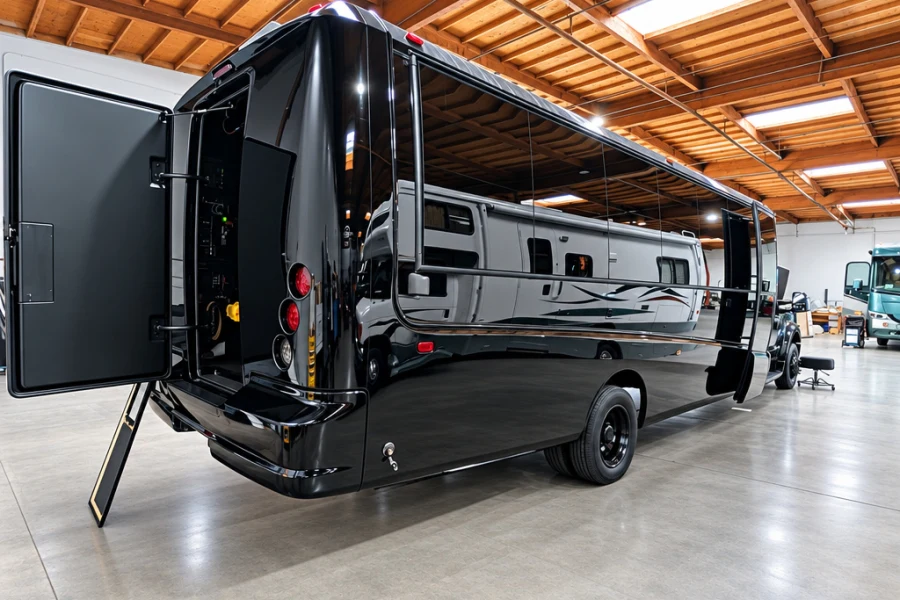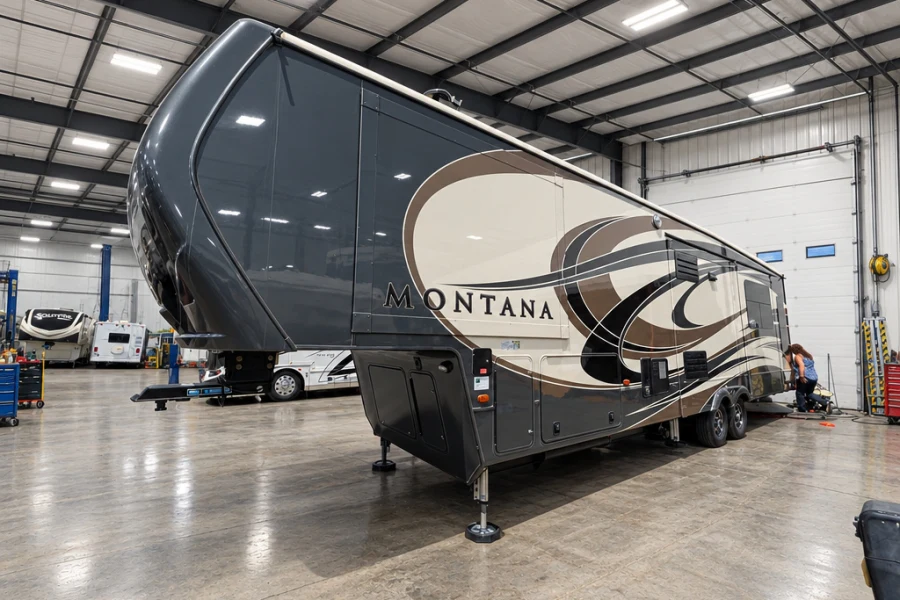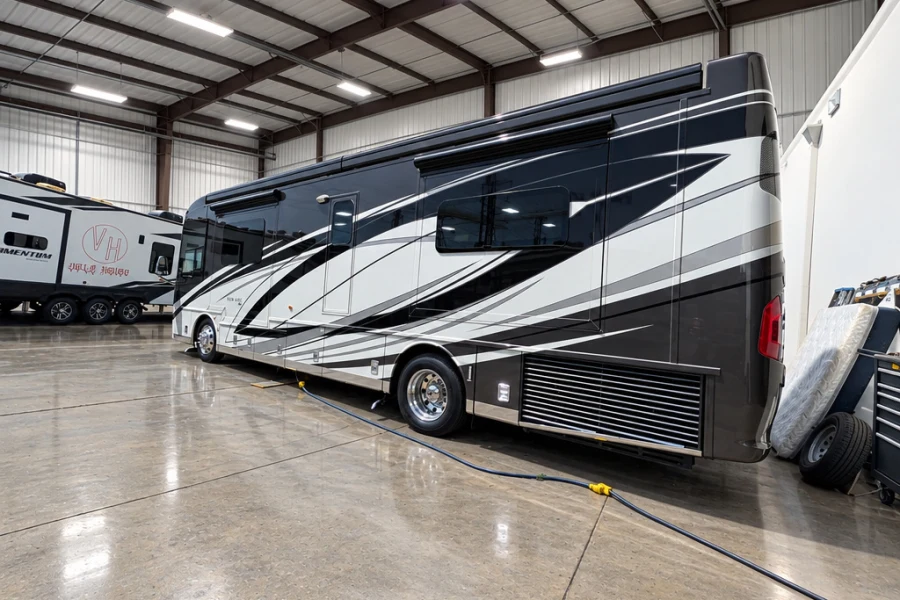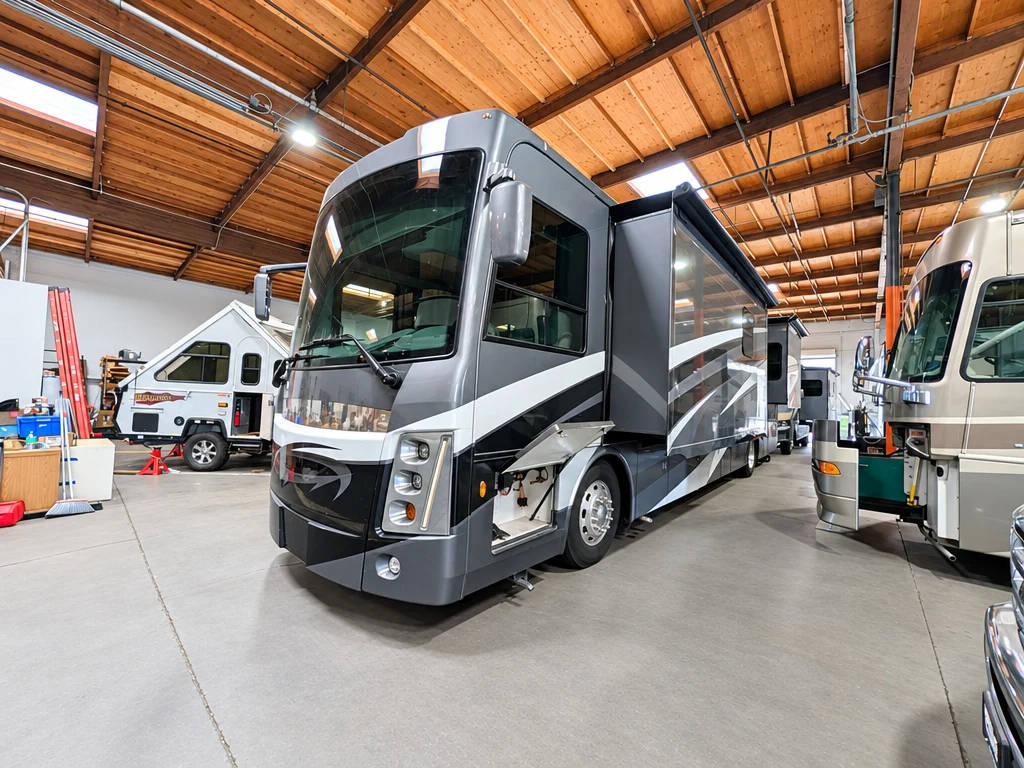
Ceramic coating has become a popular upgrade for RVs — and for good reason in Southern California’s sun. It isn’t magic armor, but applied correctly it adds a durable layer of protection that wax can’t match. Here’s what it does and doesn’t do.
What ceramic coating is
A ceramic coating is a liquid that bonds to paint and gel coat and cures into a hard, clear, slick layer. It resists UV, water spots and contaminants, and makes the RV much easier to wash.
What it protects against
- UV fading and oxidation
- Bird droppings, tree sap and bug residue etching the finish
- Water spotting
- Black streaks sticking to the sidewalls
What it doesn't do
- It won’t stop rock chips, scrapes or collision damage
- It doesn’t fix oxidation already there — that has to be corrected first
- It doesn’t replace washing; it makes washing easier
Prep is everything
A coating locks in whatever is under it. The surface must be washed, decontaminated and polished to remove oxidation before the coating goes on. That prep is most of the work — and the reason a professional application lasts.
Is it right for your RV?
If your RV lives outdoors, ceramic coating usually pays off in a finish that stays glossy and is easier to keep clean. See RV detailing.
Frequently asked questions
How long does an RV ceramic coating last?
It depends on the product, prep and how the RV is stored and washed — typically much longer than wax.
Can ceramic coating go on gel coat?
Yes. It bonds to painted surfaces and fiberglass gel coat.
Do I still need to wax?
No, but you still need to wash regularly with a coating-safe soap.
Need help with this? See our RV detailing service, call (949) 830-1996, or request an appointment. Appointments are available Monday through Friday, and Saturday appointments begin January 1, 2027.

Have a question about your RV?
Our service advisors answer the phone — and we put the estimate in writing before any work.