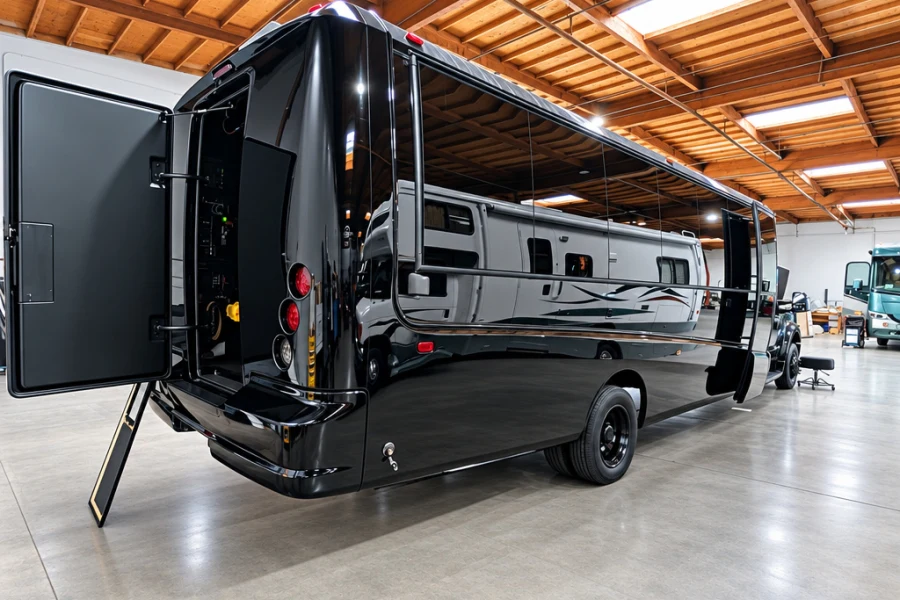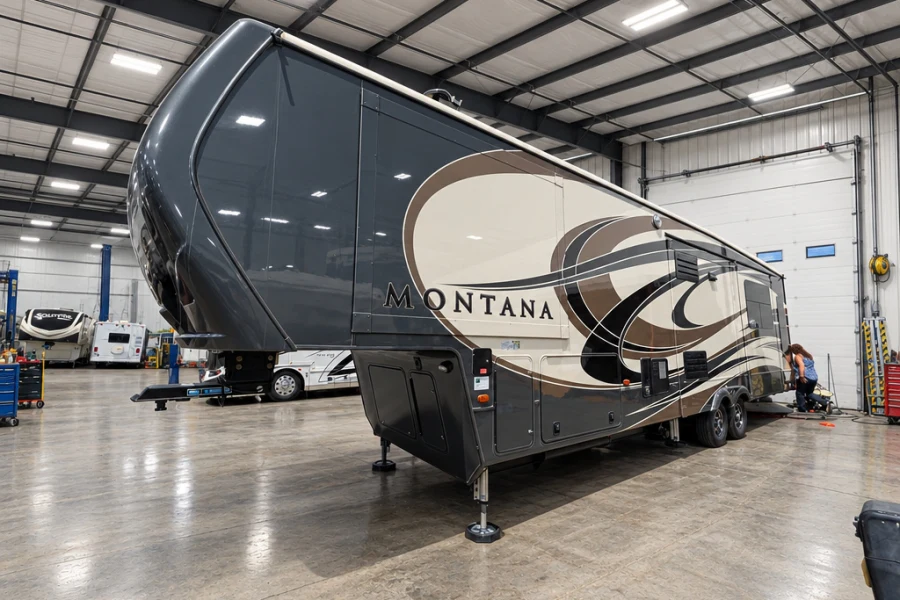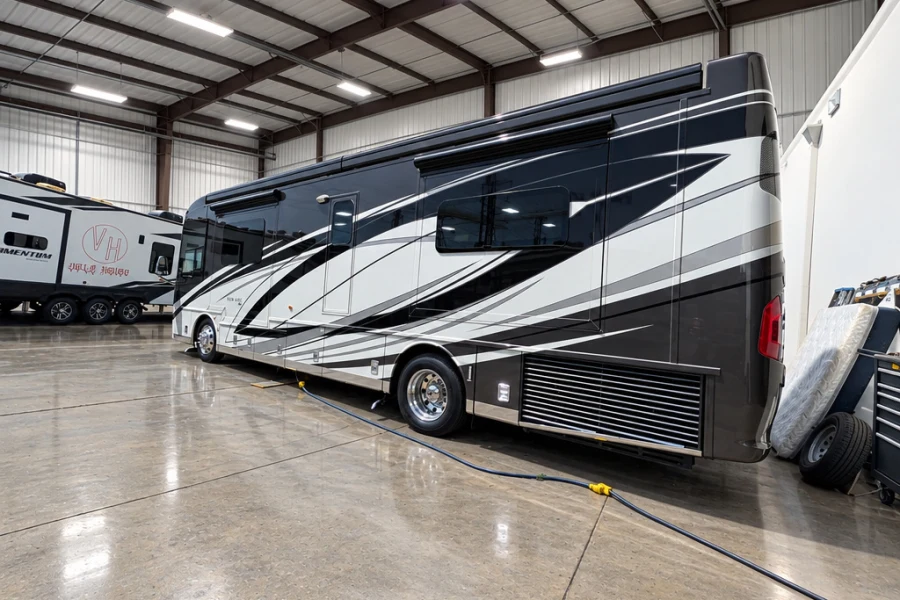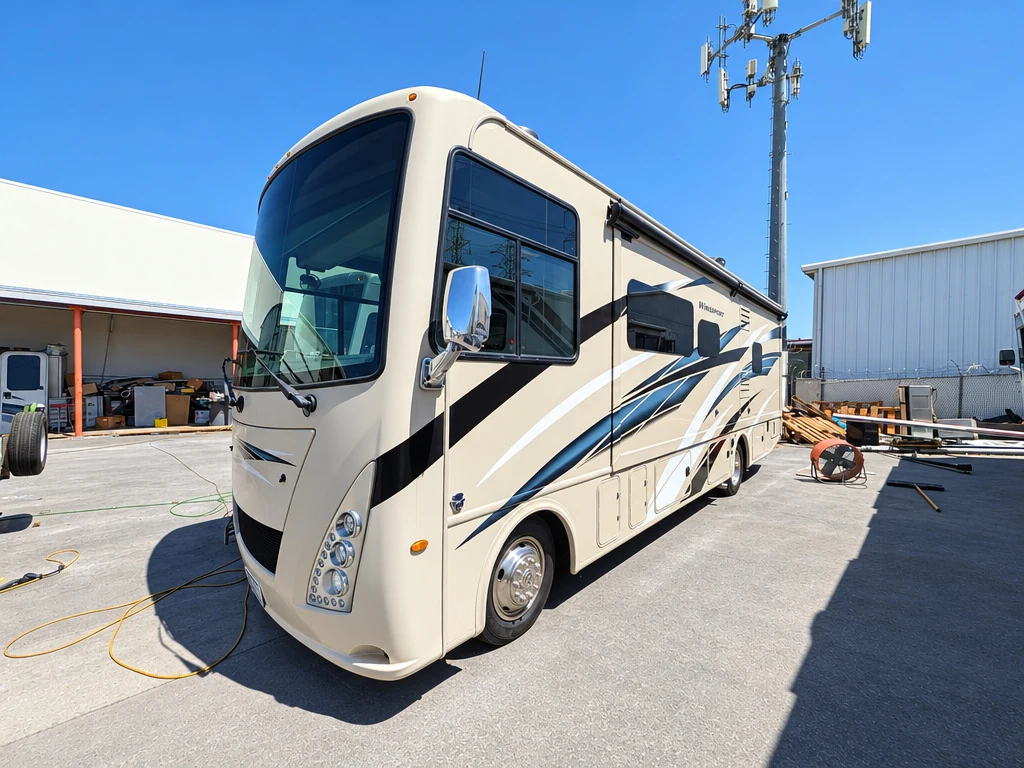
Buffing — compounding and polishing — is what brings a dull, chalky motorhome back to a deep shine. The cost depends mostly on how much oxidation has built up and how big the coach is.
What buffing actually does
Sun breaks down paint and gel coat into a chalky surface layer. Buffing removes that oxidized layer with compound, then refines the finish with polish. A protective wax or coating seals it afterward.
What affects the price
- Size. Length and height determine labor, and tall coaches need lifts or scaffolding.
- Oxidation level. Light haze takes one step; heavy chalking takes several.
- Paint vs. gel coat. Full-body paint and fiberglass gel coat need different products.
- Graphics and decals. Older decals need extra care so they aren’t damaged.
- Protection. Wax, sealant or ceramic coating after buffing.
How to keep the shine longer
- Wash regularly with an RV-safe soap.
- Park in shade or under a cover when possible.
- Apply protection after buffing.
- Have light oxidation corrected before it becomes heavy.
Get a quote
Send a few photos or bring the coach in, and we’ll quote it based on its actual condition. See RV detailing and RV paint and body.
Frequently asked questions
How often should a motorhome be buffed?
It depends on sun exposure — many coaches stored outdoors need it every year or two.
Can buffing fix faded paint?
Buffing fixes oxidation. If the paint itself has failed, refinishing may be needed.
Is buffing safe for decals?
With the right products and technique, yes. Very old decals may need replacement.
Need help with this? See our RV detailing service, call (949) 830-1996, or request an appointment. Appointments are available Monday through Friday, and Saturday appointments begin January 1, 2027.

Have a question about your RV?
Our service advisors answer the phone — and we put the estimate in writing before any work.