Southern California is dry most of the year — so many owners are surprised to find mold inside their RV. It almost always points to one thing: water getting in, or moisture getting trapped. Here’s how to find the source and stop it.
Where the moisture comes from
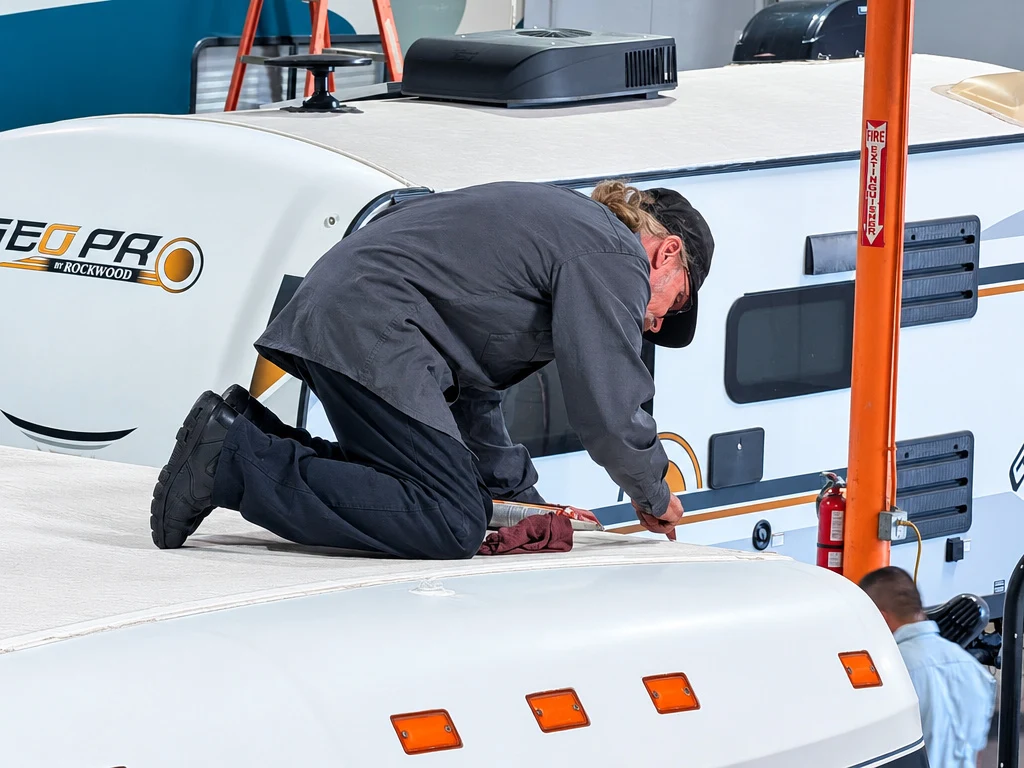
- Roof leaks around vents, skylights, A/C units and seams
- Window and door seals
- Slide-out seals and toppers
- Plumbing leaks under sinks, behind the toilet and at the water heater
- Condensation from cooking, showers and sleeping in a closed RV
Warning signs
- A musty smell, especially after rain
- Stains or discoloration on ceilings and walls
- Soft spots in the floor or walls
- Peeling wallpaper or bubbling wall panels
- Black spots in cabinets and corners
What to do
- Find and fix the water source first — cleaning mold without stopping the leak won’t last.
- Dry the area thoroughly.
- Remove and replace damaged materials such as wet insulation or rotted wood.
- Improve ventilation: run vent fans while cooking and showering, and crack a roof vent in storage.
Prevention
A yearly roof and seal inspection is the best defense. We offer a free roof inspection with any fall service — see free RV roof inspection.
Frequently asked questions
Is RV mold dangerous?
Mold can affect air quality and comfort, and it signals water damage. Address the source and the damaged materials promptly.
Can I just clean the mold?
Only after the leak is fixed and the area is dried — otherwise it returns.
Can you find hidden leaks?
Yes. See how we diagnose hard-to-find leaks.
Need help with this? See our RV roof repair and replacement service, call (949) 830-1996, or request an appointment. Appointments are available Monday through Friday, and Saturday appointments begin January 1, 2027.

Have a question about your RV?
Our service advisors answer the phone — and we put the estimate in writing before any work.