Water is the number one enemy of an RV. The good news: most leaks are preventable with a few habits and a yearly professional inspection.
Habits that prevent leaks
- Inspect the roof, seams and sealant every year — and after storms.
- Re-seal cracked sealant before it opens up.
- Check window and door seals for gaps.
- Keep slide-out seals clean and conditioned.
- Clear debris and leaves from the roof and slide toppers.
- Use vent covers so vents can stay cracked without letting rain in.
- Store the RV covered or under a roof when possible.
Inside the RV
- Look under sinks and around the toilet for drips
- Check the water heater and pump connections
- Watch for soft spots in floors near walls
- Notice musty smells — they’re an early warning
After rain
Walk through the RV after the first storms of the season. Look at ceilings, corners, around windows and inside cabinets.
Get a professional check
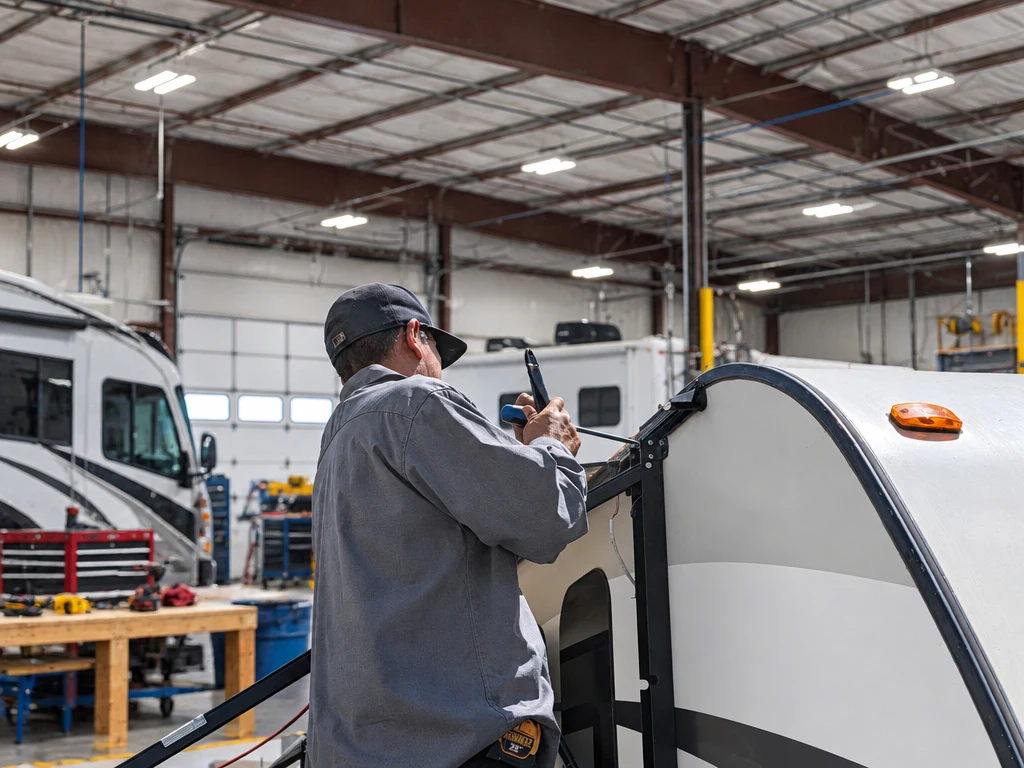
Some leaks are invisible until the damage is done. A yearly inspection catches them early. See free fall roof inspection and how we trace hard-to-find leaks.
Frequently asked questions
What's the most common source of RV leaks?
The roof — especially sealant around vents, skylights, A/C units and seams.
How often should I re-seal my RV roof?
Inspect it yearly and re-seal wherever sealant is cracked or separating.
Do RV covers help?
Yes, a breathable RV cover reduces sun and weather exposure in storage.
Need help with this? See our RV roof repair and replacement service, call (949) 830-1996, or request an appointment. Appointments are available Monday through Friday, and Saturday appointments begin January 1, 2027.

Have a question about your RV?
Our service advisors answer the phone — and we put the estimate in writing before any work.